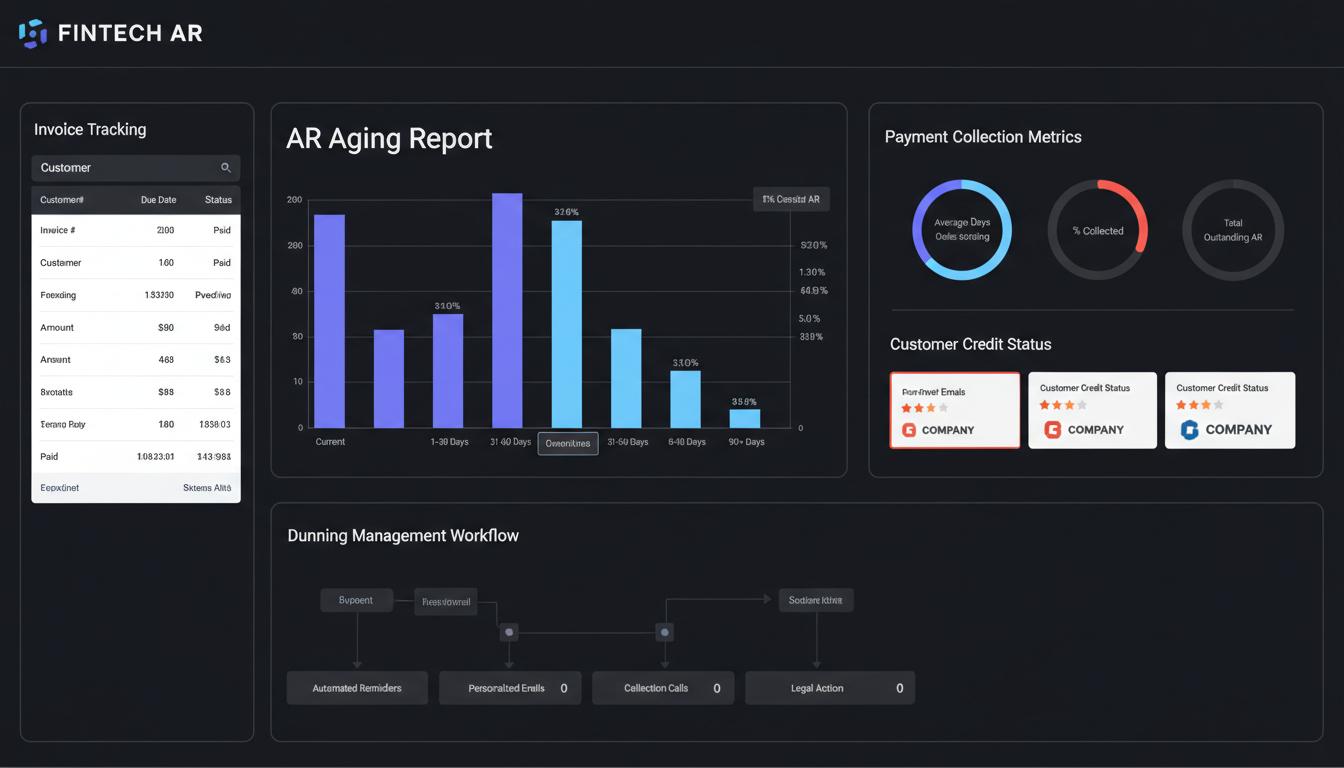
Accounts Receivable Management
Transform your accounts receivable operations with intelligent automation. From credit management to collections, streamline your entire AR process to reduce DSO, improve cash flow, and strengthen customer relationships.
Cut days sales outstanding by 20-30% with intelligent collections strategies.
Accelerate cash collection and reduce bad debt write-offs.
Eliminate manual dunning with automated, personalized communication.
Identify high-risk accounts early and take proactive action.
Provide self-service options and proactive communication.
Let your team focus on high-value activities while automation handles routine tasks.
Our SOPs are built on years of industry experience and best practices from leading finance teams.
Establish credit evaluation criteria: financial statements, trade references, credit bureau reports. Set credit limits based on risk assessment and business relationship. Review credit limits annually or upon significant order increases. Monitor credit exposure and implement hold procedures for exceeded limits. Document credit approval authority matrix by dollar amount.
Segment customers by risk score, invoice age, and payment history. Define contact frequency: current (monthly), 30 days (weekly), 60+ days (daily). Escalate accounts through collection phases: reminder, demand, final notice, legal. Document all customer contacts with dates, commitments, and outcomes. Review collection effectiveness monthly and adjust strategies.
Categorize disputes: pricing, quantity, quality, delivery, documentation. Acknowledge disputes within 24 hours of receipt. Assign disputes to appropriate departments for investigation. Resolve disputes within 10 business days or escalate. Track dispute root causes and implement preventive measures.
Apply payments within 24 hours of receipt. Match payments to invoices using remittance data. Research and resolve unapplied cash within 48 hours. Process deductions according to deduction management procedures. Reconcile daily cash receipts to bank deposits and ERP postings.
Deep domain expertise built into every feature, based on years of industry experience.
DSO (Days Sales Outstanding) measures average collection time. Best practice DSO is within 10 days of payment terms. CEI (Collection Effectiveness Index) targets above 80%. Bad debt ratio should remain below 0.5% of sales. AR turnover indicates how often receivables are collected annually. Aging reports track invoice distribution by age buckets.
5 C's of Credit: Character, Capacity, Capital, Collateral, Conditions. Financial statement analysis evaluates liquidity, profitability, and leverage. Trade references provide payment history from other suppliers. Credit bureau scores predict default probability. Industry benchmarks compare customer performance to peers. Ongoing monitoring detects deterioration signals.
Contact customers before invoices are due to confirm receipt. Use multiple communication channels: email, phone, portal notifications. Personalize dunning messages based on customer relationship and history. Offer convenient payment options and early payment discounts. Document all promises to pay and follow up on missed commitments. Escalate systematically based on age and amount.
ERP integration ensures real-time invoice and payment visibility. Customer portals reduce inquiry calls and improve satisfaction. Automated workflows route tasks based on rules and workload. AI predicts payment timing and identifies at-risk accounts. E-invoicing accelerates delivery and reduces disputes. Payment gateways enable online payments and auto-pay options.