← Back to Home

Workflow Automation

Finortal Workflow

Design, automate, and optimize your finance processes with our no-code workflow platform. From invoice approvals to month-end close, create intelligent workflows that route tasks, enforce policies, and keep your team productive.

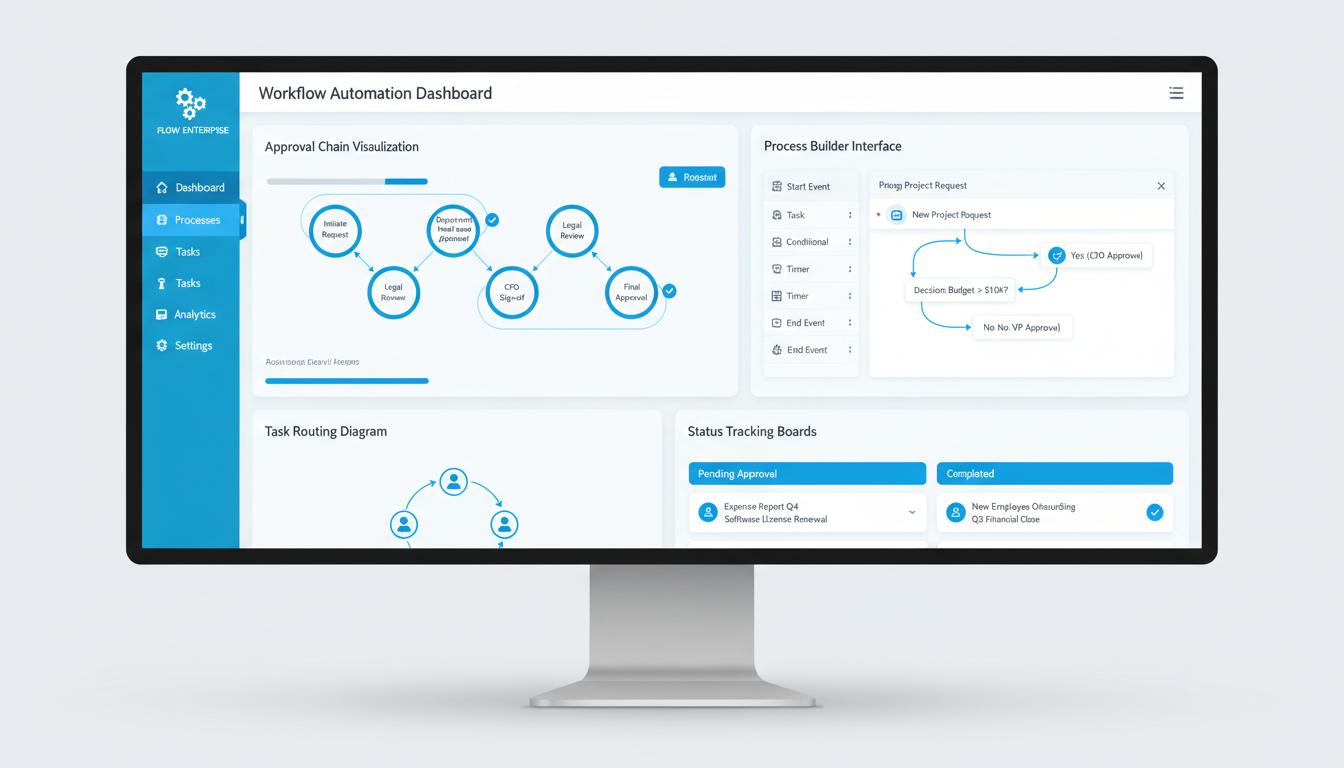
Finortal Workflow Dashboard
70%
Faster Approvals
90%
Policy Compliance
10x
Volume Scaling
99.9%
Audit Accuracy

Everything You Need

Visual workflow designer with drag-and-drop
Intelligent task routing and assignment
Conditional logic and branching
SLA monitoring and escalation
Mobile approval capabilities
Audit trail and compliance reporting
Integration with email and Slack
Real-time workflow analytics

Why Choose Finortal Workflow?

1

Faster Approvals

Cut approval cycle times by 70% with automated routing and mobile notifications.

2

Enforce Policies

Embed business rules directly into workflows to ensure compliance.

3

Increase Visibility

Track every request in real-time and identify bottlenecks instantly.

4

Reduce Errors

Eliminate manual handoffs and data entry errors with automation.

5

Scale Operations

Handle 10x volume without adding headcount through intelligent automation.

6

Improve Compliance

Maintain complete audit trails and demonstrate SOX compliance.

Industry Best Practices

Our SOPs are built on years of industry experience and best practices from leading finance teams.

Workflow Design SOP

Map current processes before automation to identify inefficiencies. Design workflows with clear start and end states. Define decision points with explicit criteria. Include error handling paths for exception scenarios. Document workflow purpose, owners, and expected outcomes. Review and optimize workflows quarterly based on performance metrics.

Approval Matrix Configuration SOP

Define approval hierarchies based on amount thresholds and document types. Configure delegation rules for approver absences. Establish escalation paths for overdue approvals. Implement segregation of duties requirements. Maintain approver lists with current roles and authorities.

SLA & Escalation Management SOP

Set SLAs based on process criticality: urgent (4 hours), high (24 hours), normal (72 hours). Configure automatic reminders at 50% and 80% of SLA duration. Escalate to managers when SLAs are breached. Track SLA compliance rates by process and individual. Review SLA performance monthly and adjust thresholds as needed.

Change Management SOP

Document all workflow changes with business justification. Test workflows in sandbox before production deployment. Communicate changes to affected users with training materials. Maintain version history for audit purposes. Implement rollback procedures for failed deployments.

Expert Insights

Deep domain expertise built into every feature, based on years of industry experience.

Workflow Patterns

Sequential workflows move tasks through predefined steps in order. Parallel workflows allow multiple approvals simultaneously. Conditional workflows branch based on business rules. Ad-hoc workflows allow dynamic task assignment. Loop-back workflows return to previous steps for corrections. Choose patterns based on process complexity and flexibility needs.

BPMN Standards

Business Process Model and Notation provides standard workflow symbols. Start events, tasks, gateways, and end events form basic building blocks. Pools and lanes represent organizational boundaries. Message flows show inter-process communication. Following BPMN standards ensures clear communication and tool portability.

Process Optimization

Measure cycle time, wait time, and processing time for each step. Identify bottlenecks where work accumulates. Calculate process efficiency: value-added time / total cycle time. Target efficiency rates above 30% for administrative processes. Use queue theory to optimize resource allocation and parallel processing.

Change Control & Governance

Implement workflow approval boards for production changes. Maintain separation between workflow designers and business owners. Document all workflow configurations and business rules. Conduct periodic access reviews for workflow administrative privileges. Establish emergency change procedures for critical fixes.